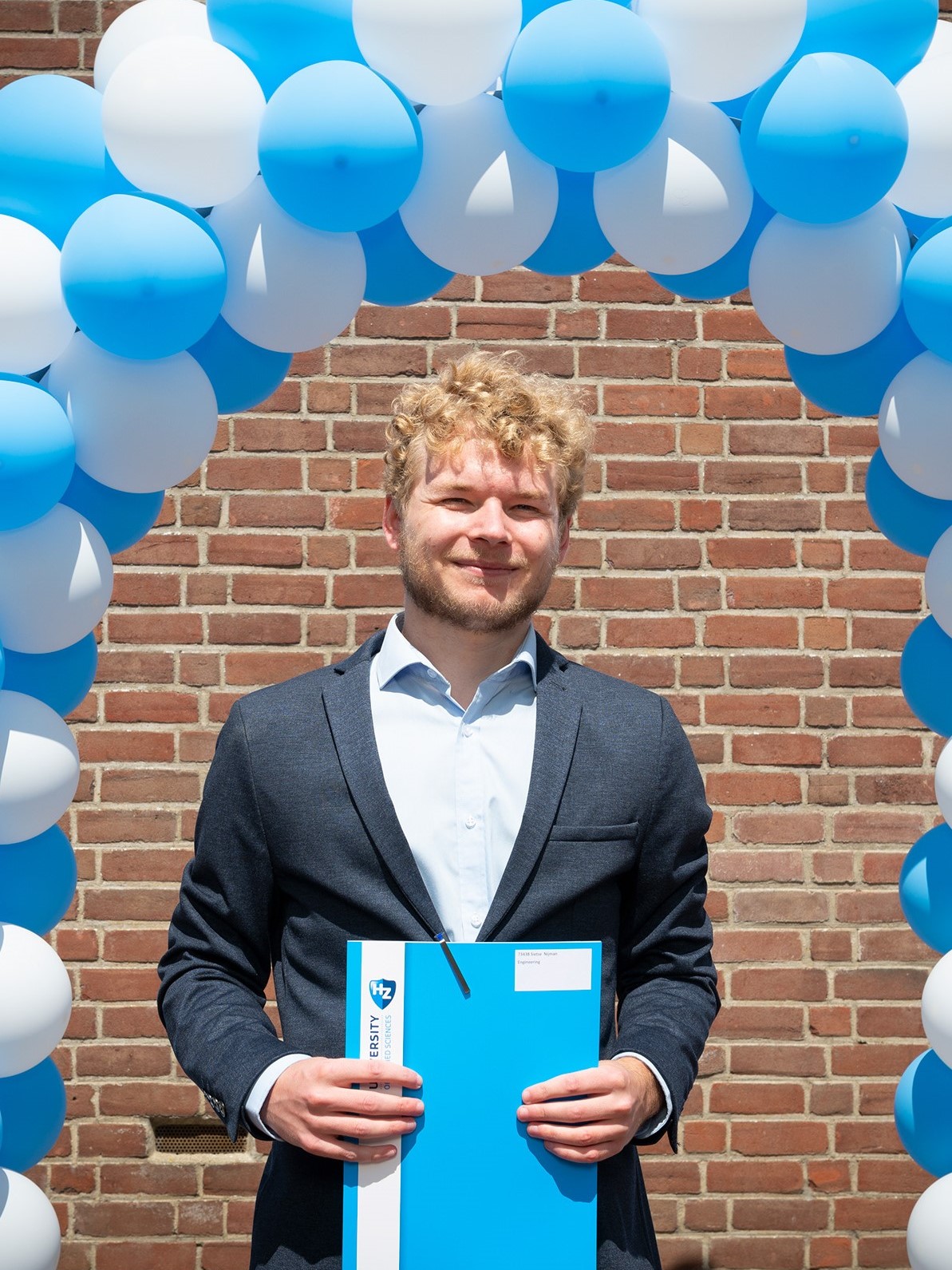
Before starting my master's in Industrial Design at the TUE, I completed a bachelor's degree in Engineering at HZ University of Applied Sciences in Vlissingen. This bachelor had multiple design directions, and I chose product design due to its focus on the human aspect. During my bachelor's, I developed an interest in consumer products but had not decided what direction specifically. To find out I started a master's in industrial design, where I could explore and find out what I would do in the future.
During the pre-master, I joined the DIGSIM squad, which got me interested in smart-home products. For that reason, I selected courses related to Math, Data, and Computing, in which I learned about AI. I learned coding languages, data analysis techniques, and how to integrate these skills with physical design, which aligns with my expertise in Technology & Realization. Through these courses, I also gained proficiency in working with electronic components and integrating them with the data using OOCSI. This knowledge helped me in projects, where I combined AI with societal interests, which eventually led to the creation of conversational agents.
Present
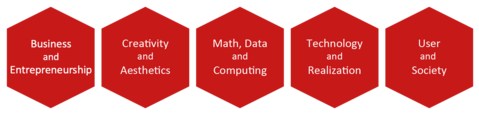
Throughout my master's degree in Industrial Design at TU/e, I have undergone significant development in five areas of expertise. These areas, along with my final master project, have shaped my vision and identity as a designer. Among these expertise areas, my primary focus has been on Technology & Realization and Math, Data & Computing, followed by User & Society, and then the remaining areas.
Press on the areas of expertise down below top open the reflection corresponding to the area;
Identity & Vision
I see Artificial Intelligence as essential in the future and something we as designers can't get around anymore. For that reason, it is important to hone our skills within this area of expertise and gain the knowledge to be able to use existing and future technology within our design.
Development
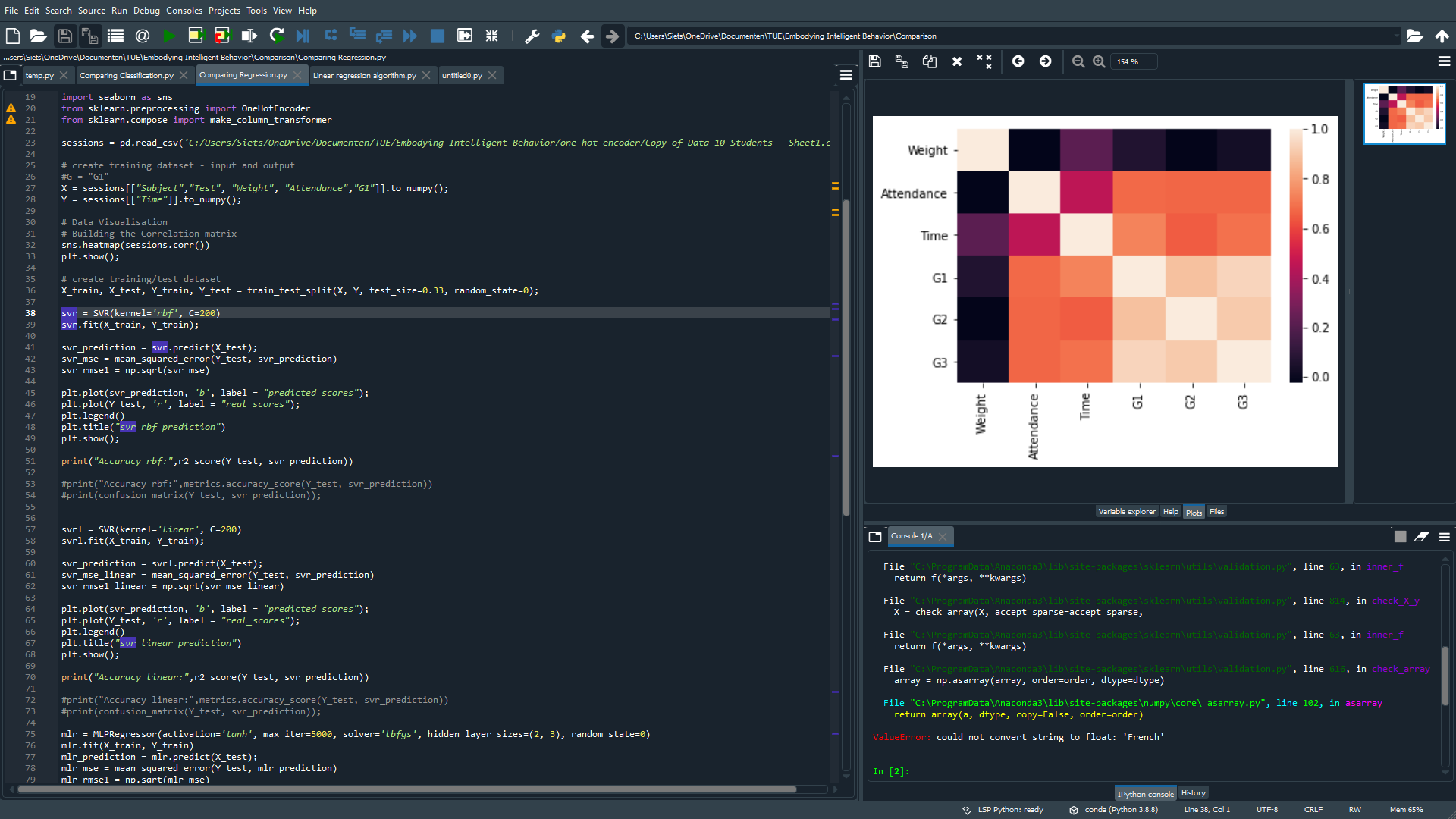
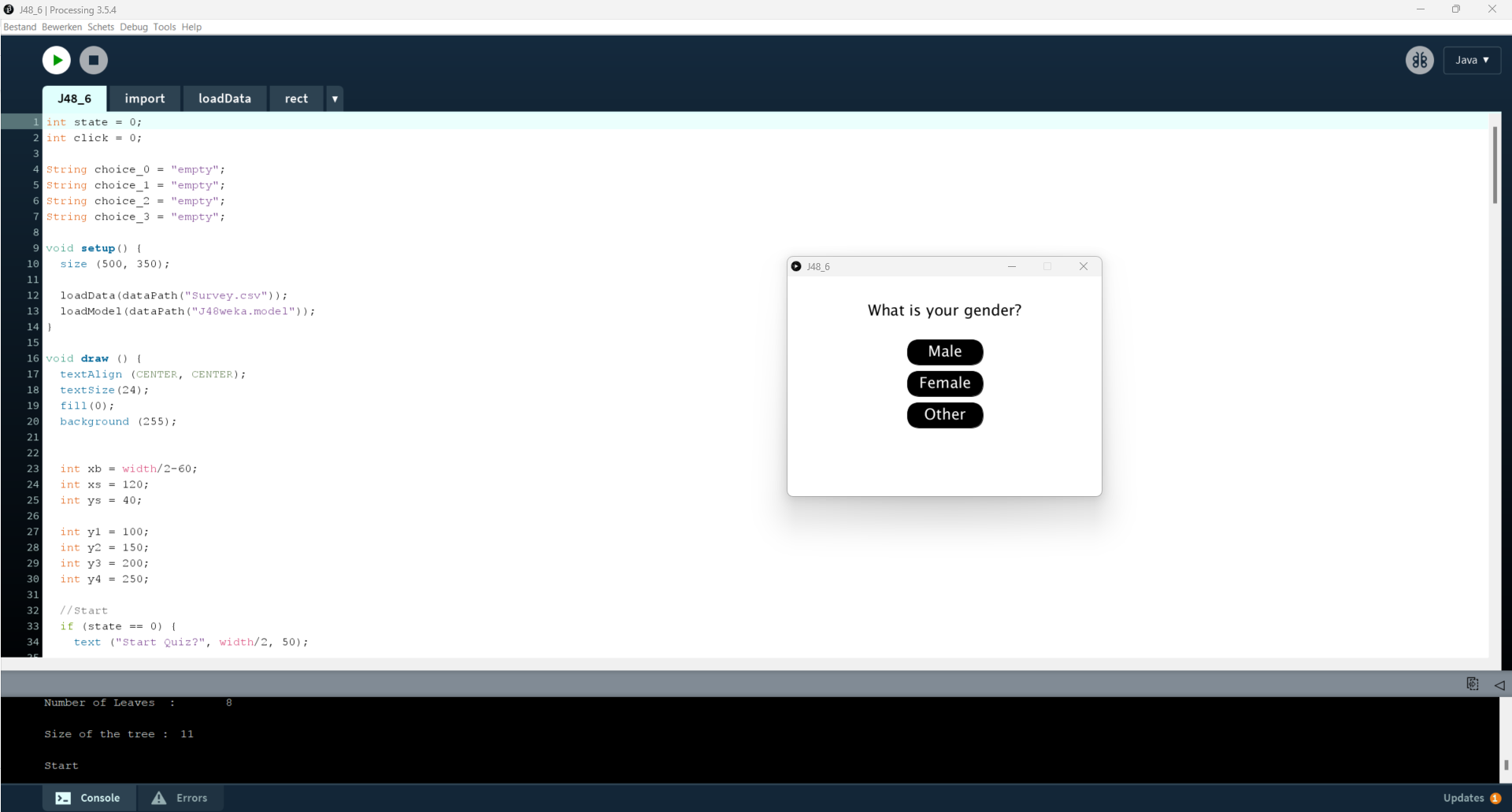
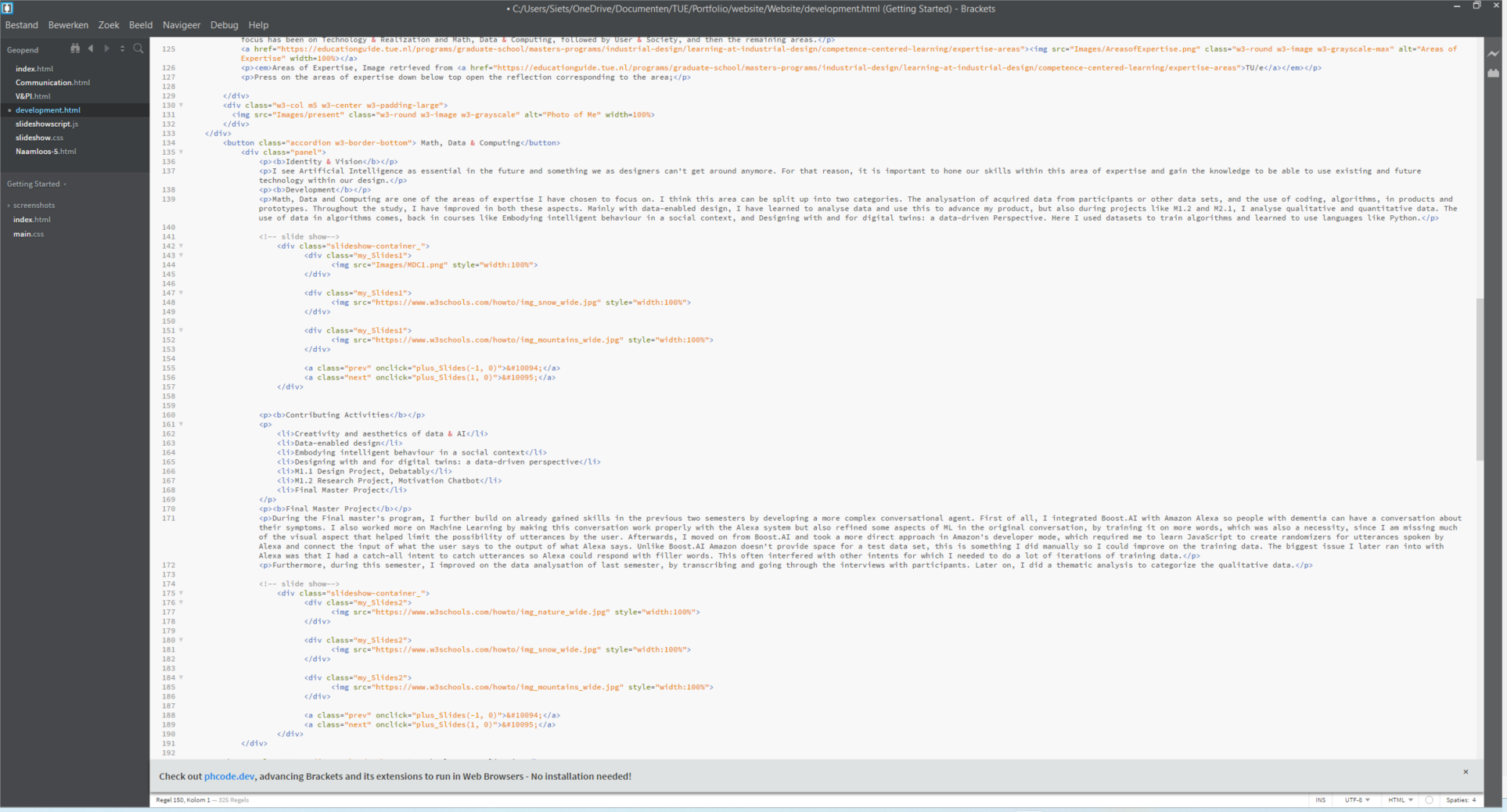
I think this area can be split up into two categories. The analysation of acquired data from participants or other data sets, and the use of coding, algorithms, in products and prototypes. Throughout the study, I have improved in both these aspects. Mainly with data-enabled design, I have learned to analyse data and use this to advance my product, but also during projects like M1.2 and M2.1 I analyse qualitative and quantitative data. The use of data in algorithms comes, back in courses like Embodying intelligent behaviour in a social context, and Designing with and for digital twins: a data-driven Perspective. Here I used datasets to train algorithms and learned to use languages like Python. Furthermore, in the previously mentioned courses, I learned to make predictions using a data set, which is something I further developed within the Designing with Advanced artificial intelligence course. Here I also learned to use Weka and integrate this with interfaces in processing, which touches on Technology & Realization.
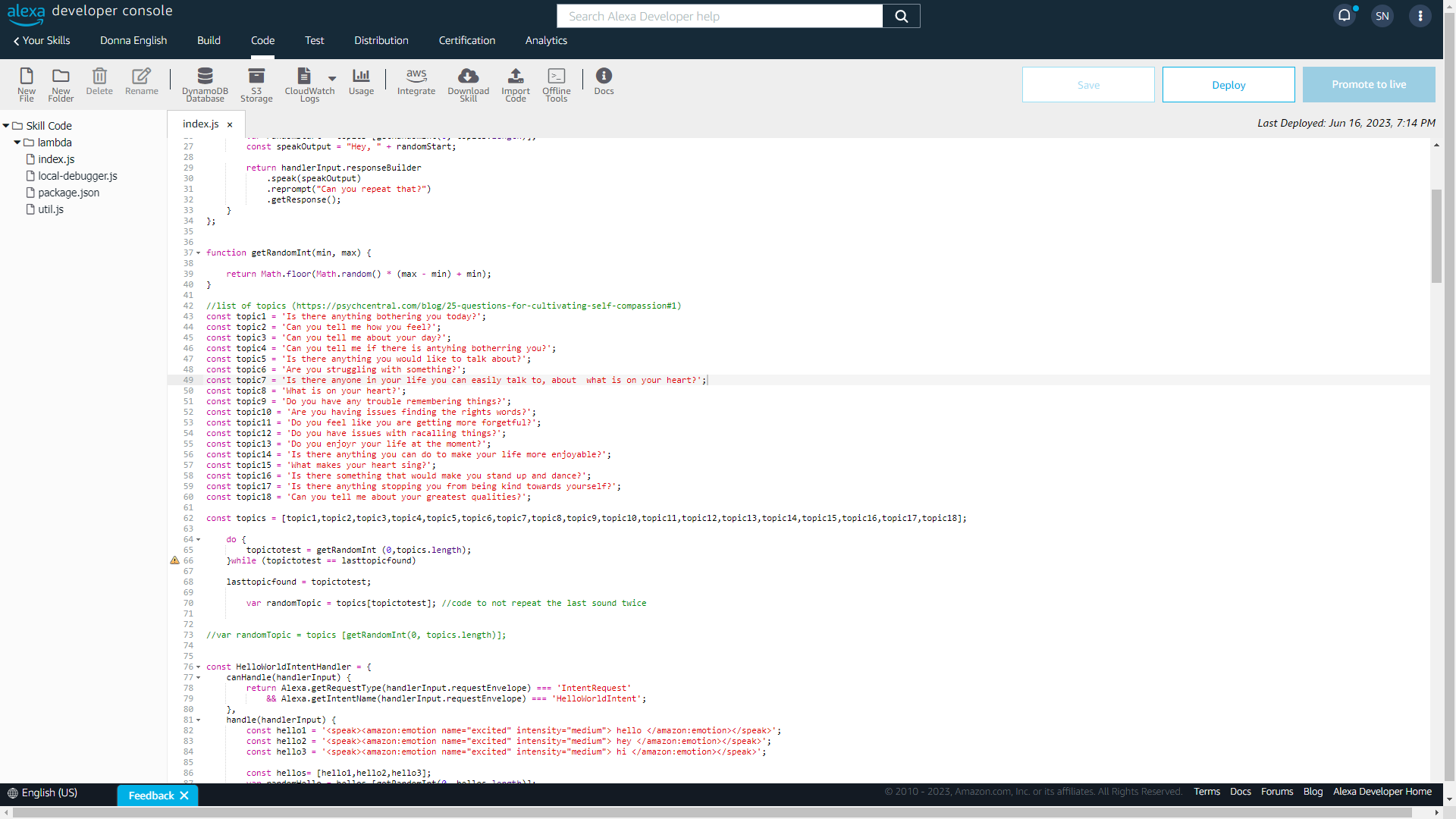
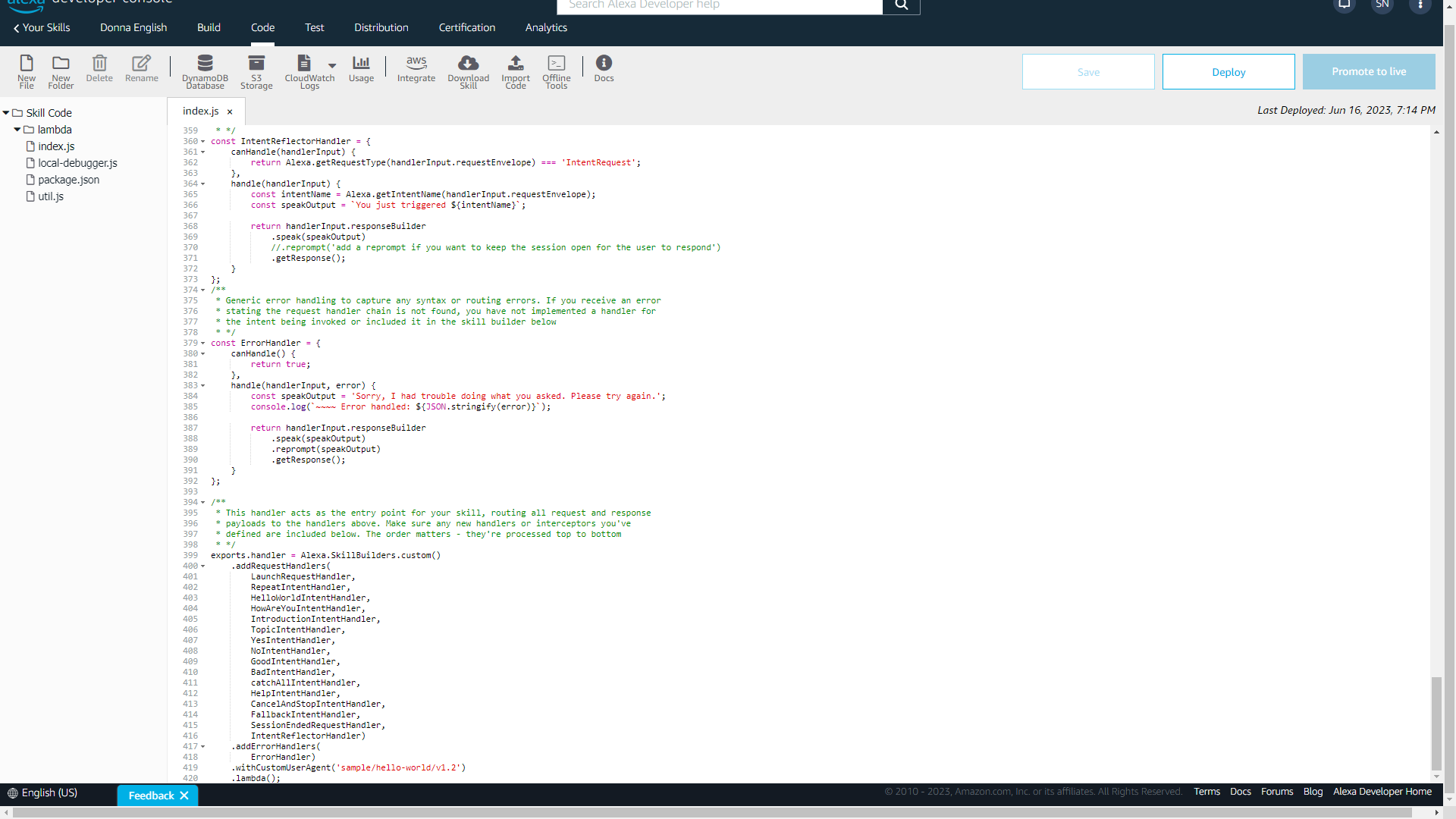
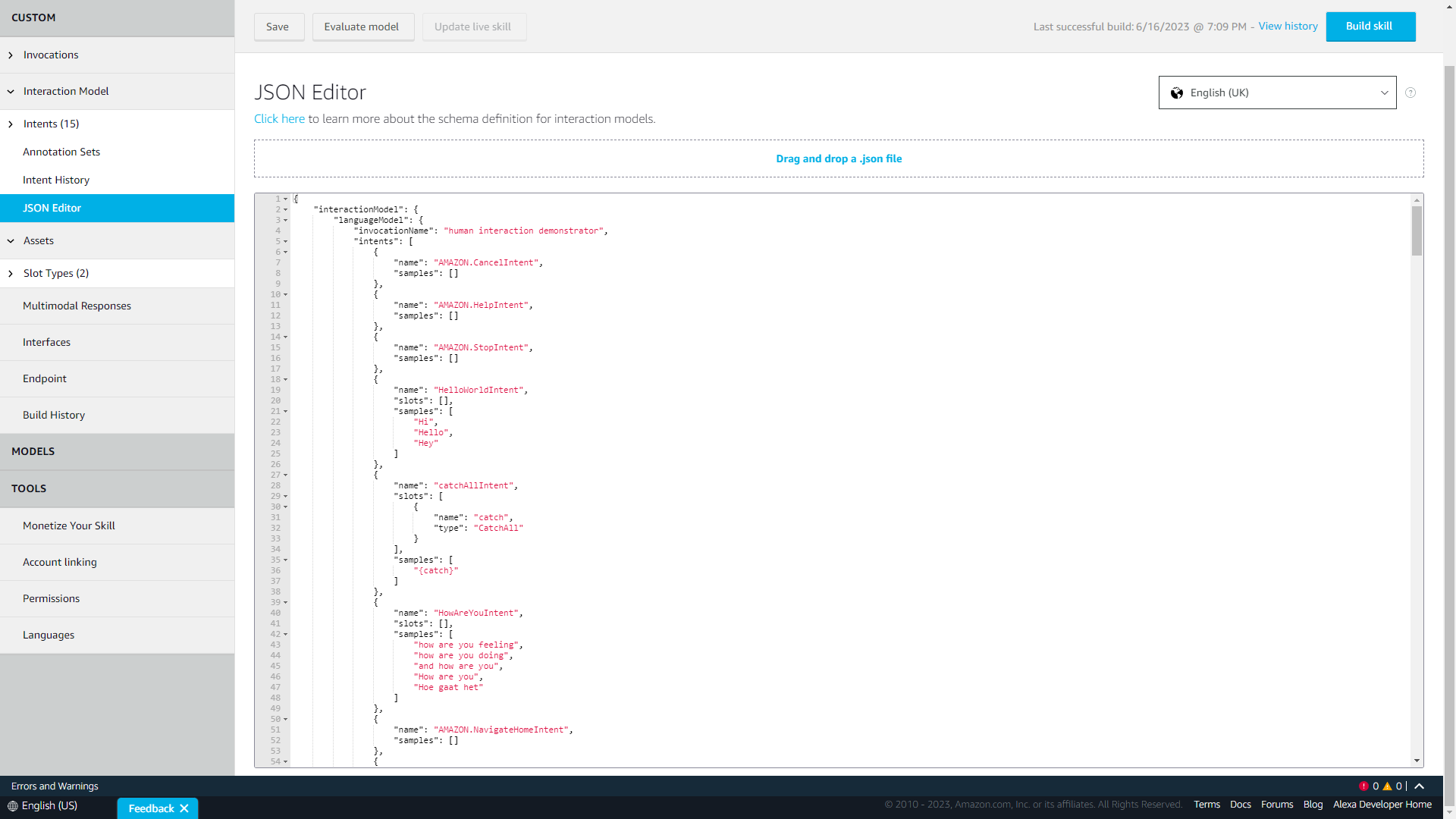
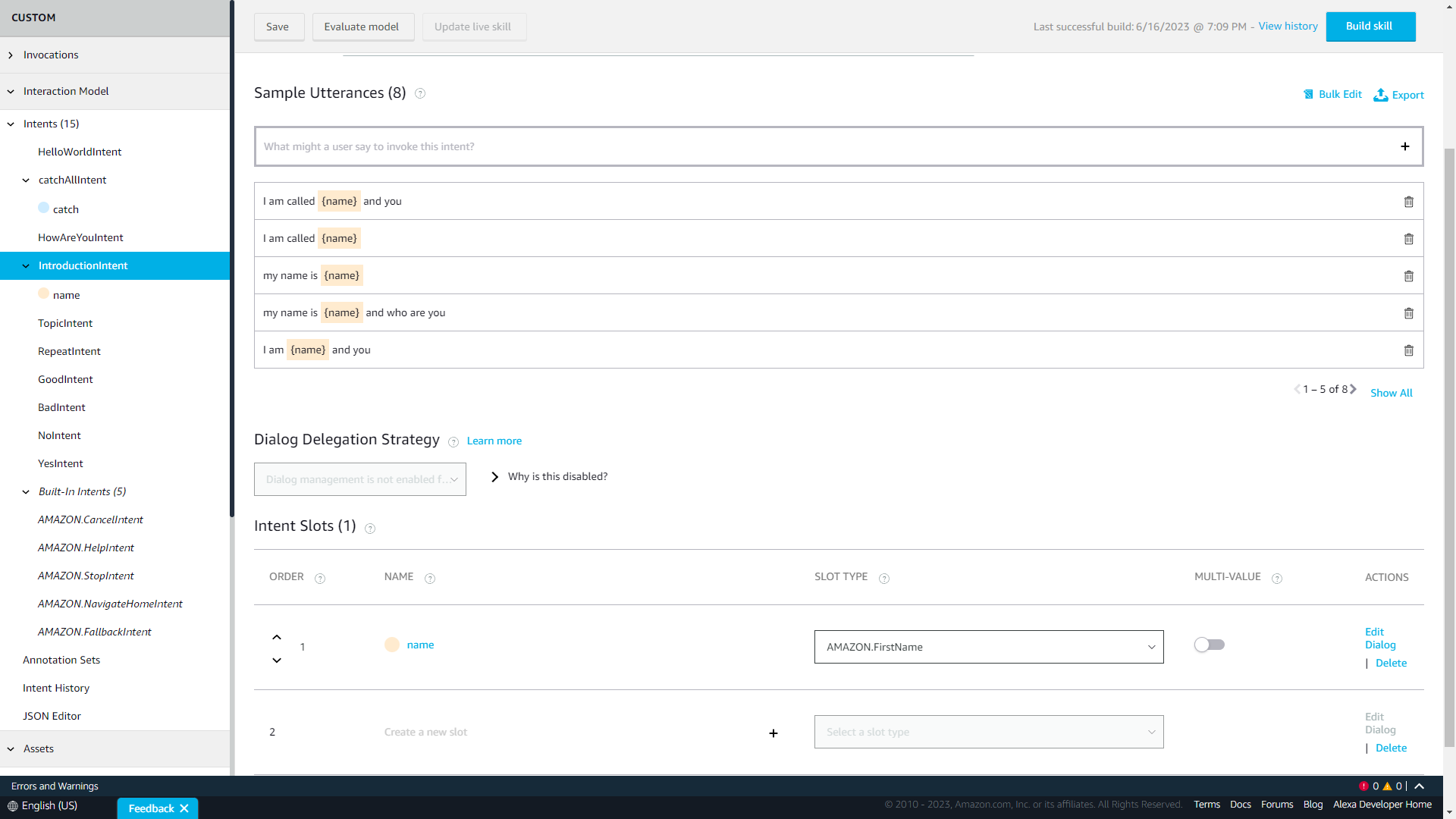
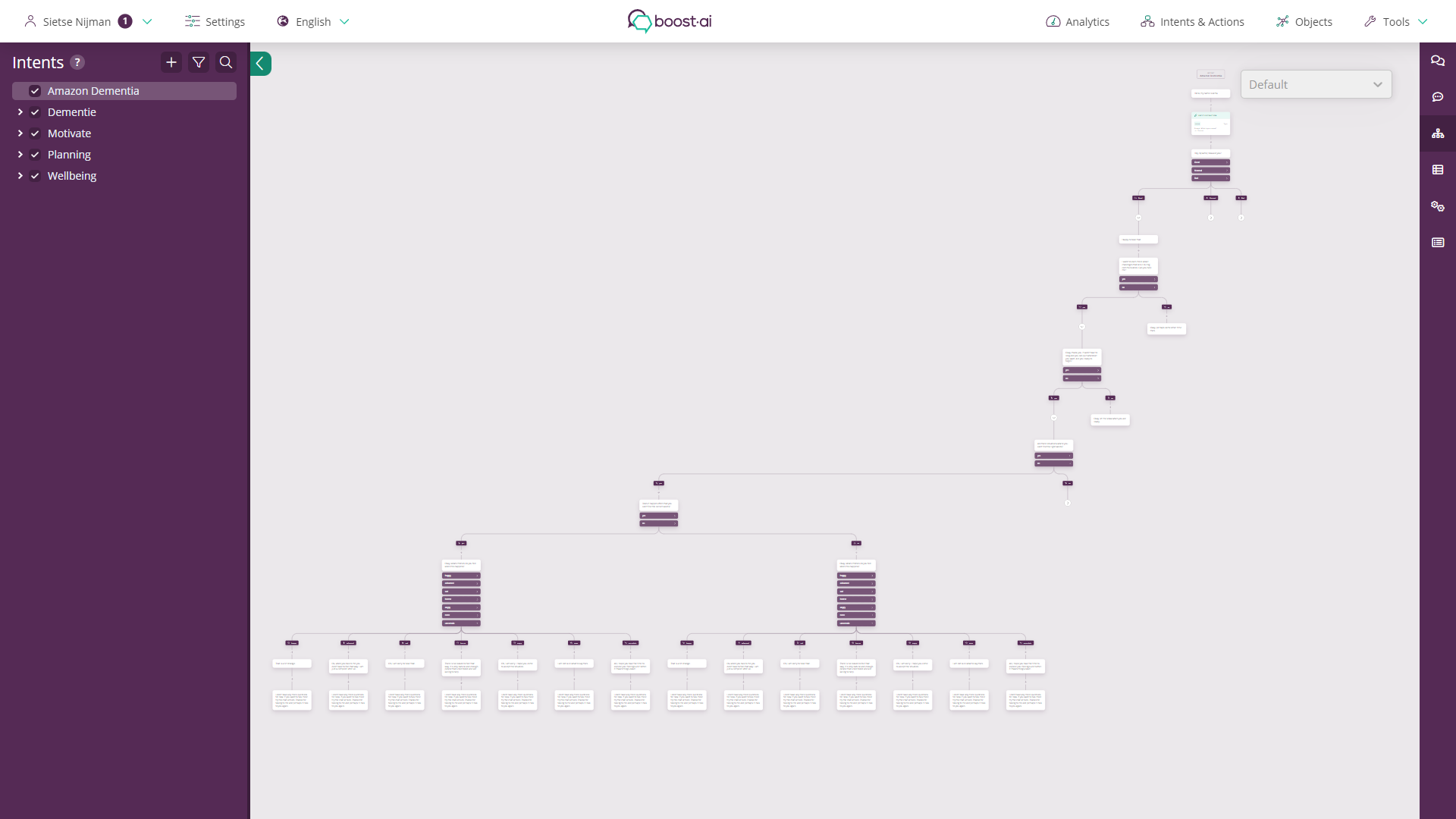
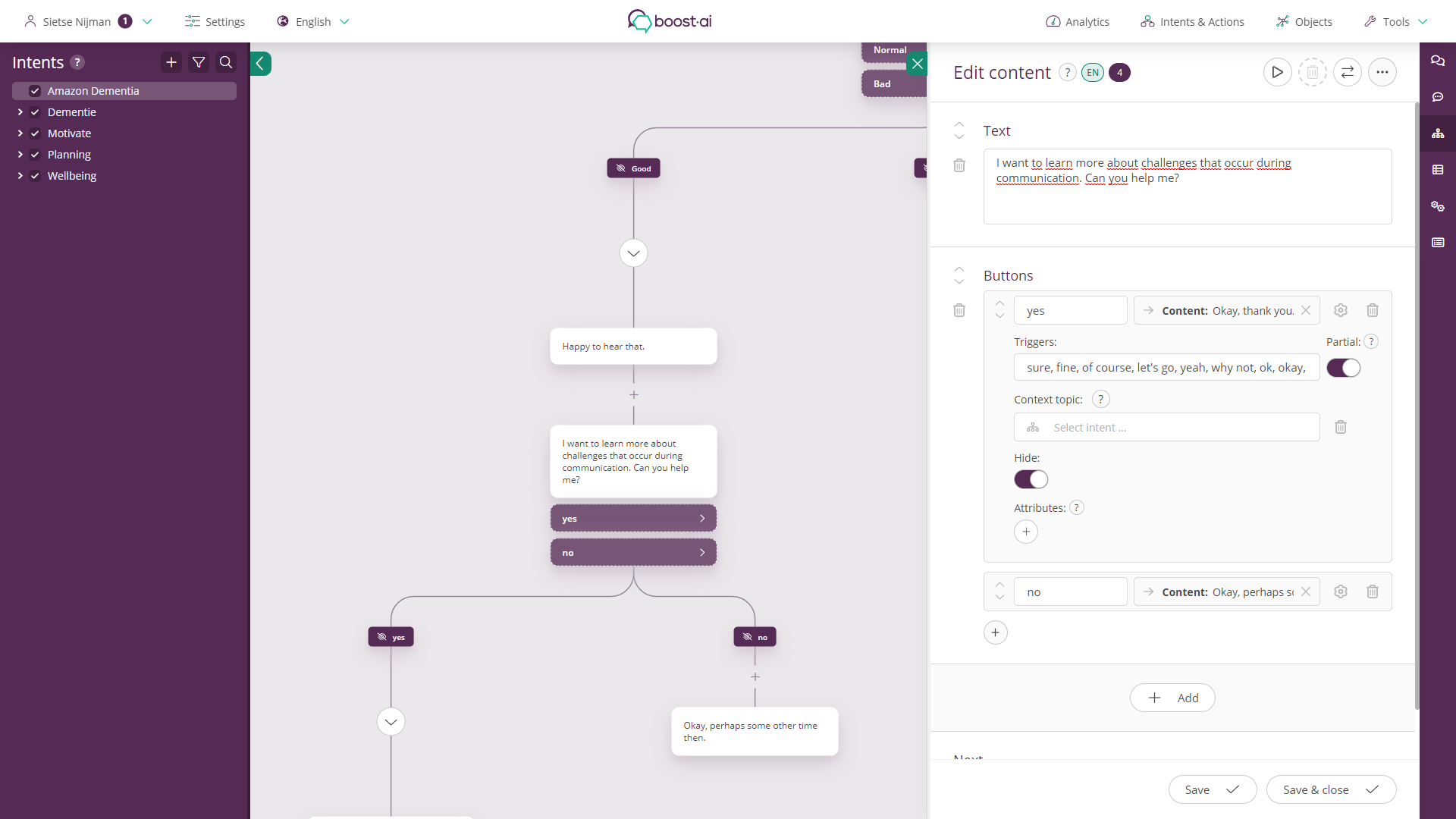
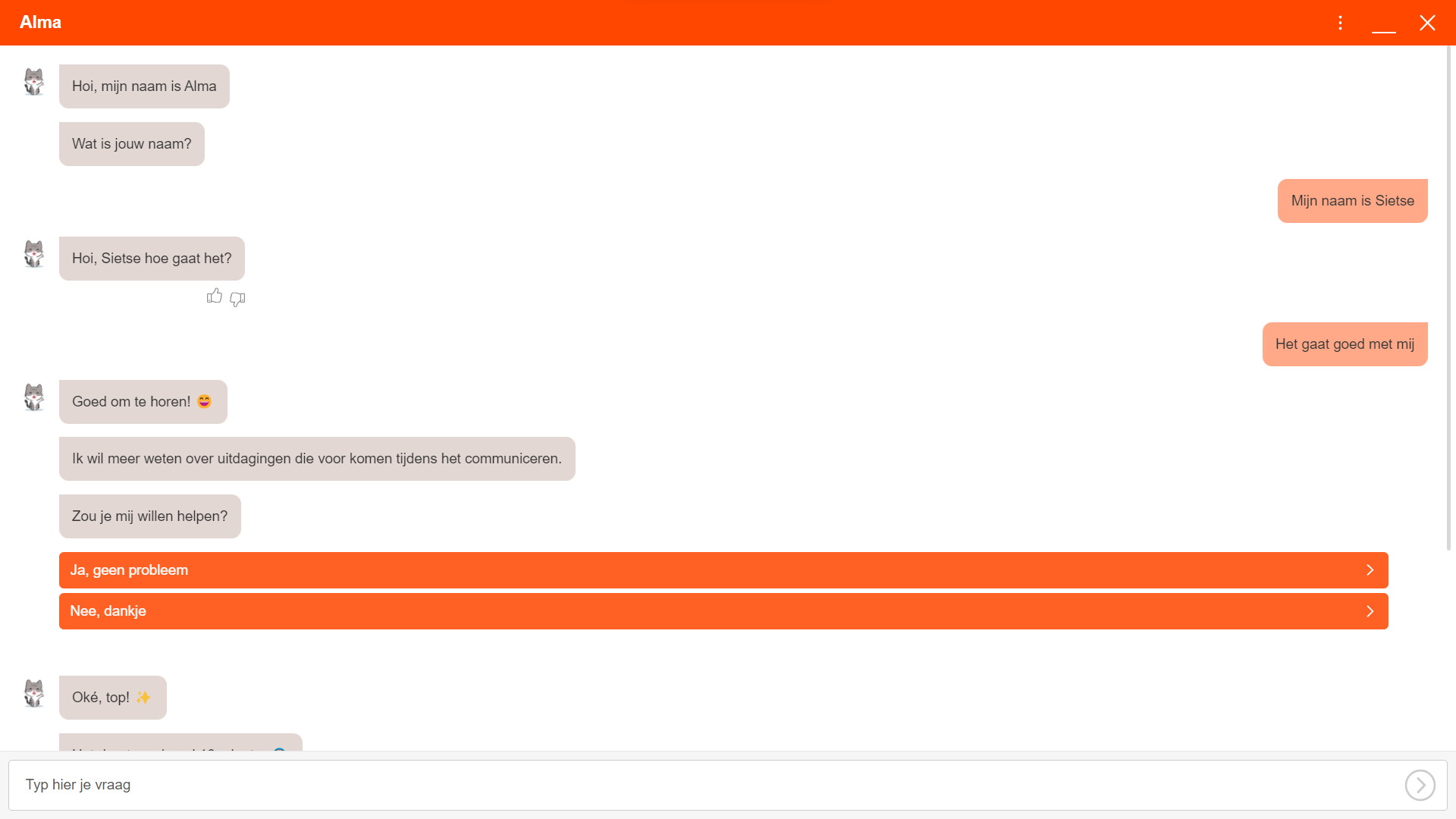
During the Final master's program, I further build on already gained skills in the previous two semesters by developing a more complex conversational agent. First of all, I integrated Boost.AI with Amazon Alexa so people with dementia can have a conversation about their symptoms. I also worked more on Machine Learning by making this conversation work properly with the Alexa system but also refined some aspects of ML in the original conversation. I did this by training it on more words, which was also a necessity since I am missing much of the visual aspect that helped limit the possibility of utterances by the user. Afterwards, I moved on from Boost.AI and took a more direct approach in Amazon's developer mode, which required me to learn JavaScript to create randomizers for utterances spoken by Alexa and connect the input of what the user says to the output of Alexa. Unlike Boost.AI Amazon doesn't provide space for a test data set. This is something I did manually so I could improve on the training data. The biggest issue I later ran into with Alexa was that I had a catch-all intent to catch utterances so Alexa could respond with filler words. This often interfered with other intents for which I needed to do a lot of iterations of training data. I started with training other intents on more words, but doing the opposite and training them on fewer words did the trick. Since there is less chance the other intents get picked up.
Furthermore, during this semester, I improved on the data analysation of last semester, by transcribing and going through the interviews. Later on, I did a thematic analysis to categorize the qualitative data.
Prototypes are important to see if the user and stakeholders understand the product and if they can use it. It also gives the opportunity to further involve them within the design process and to see what technologies work and how it can be implemented within a design. It sits based on the functionality of a product and its practical use.
Development
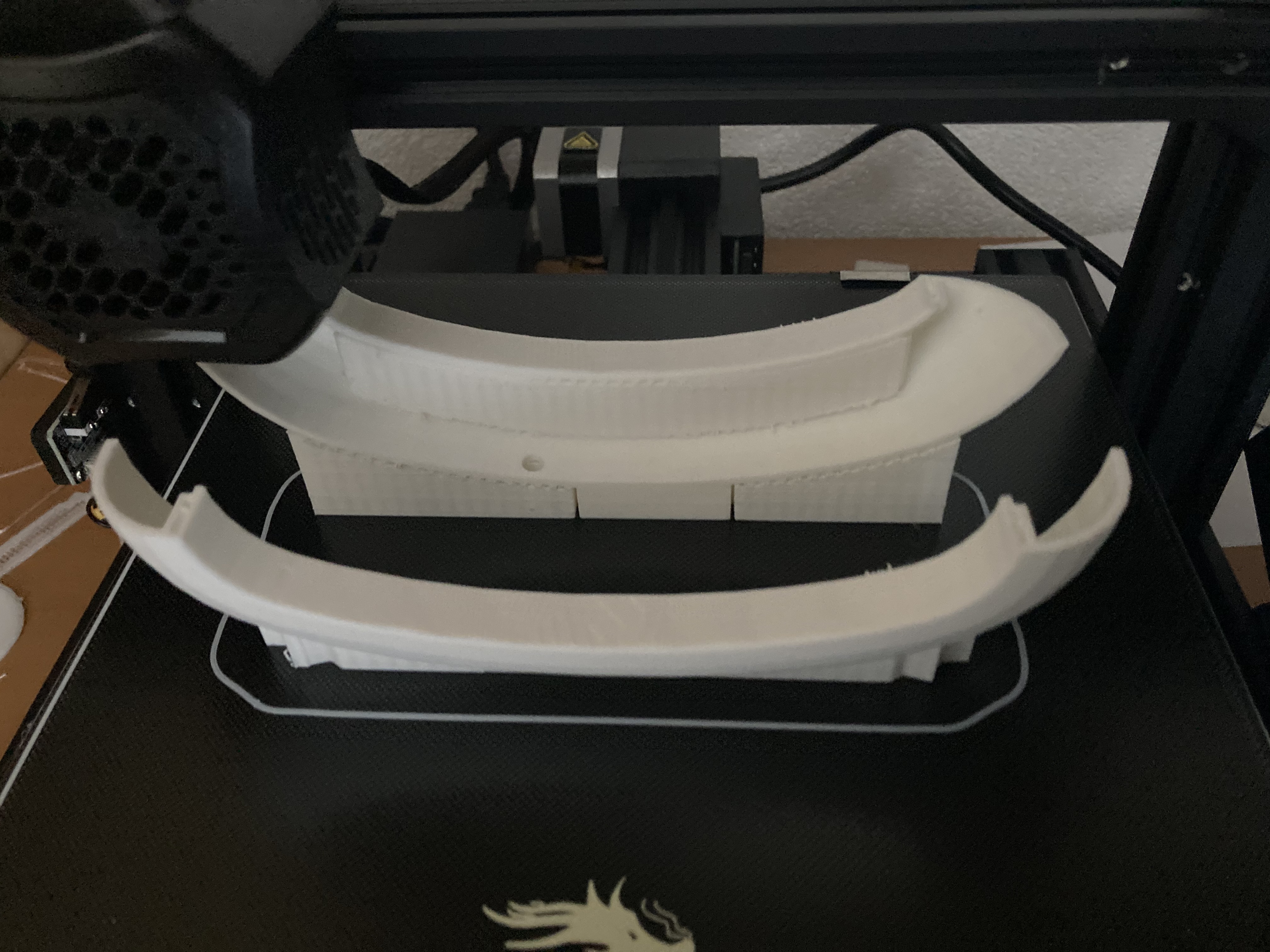
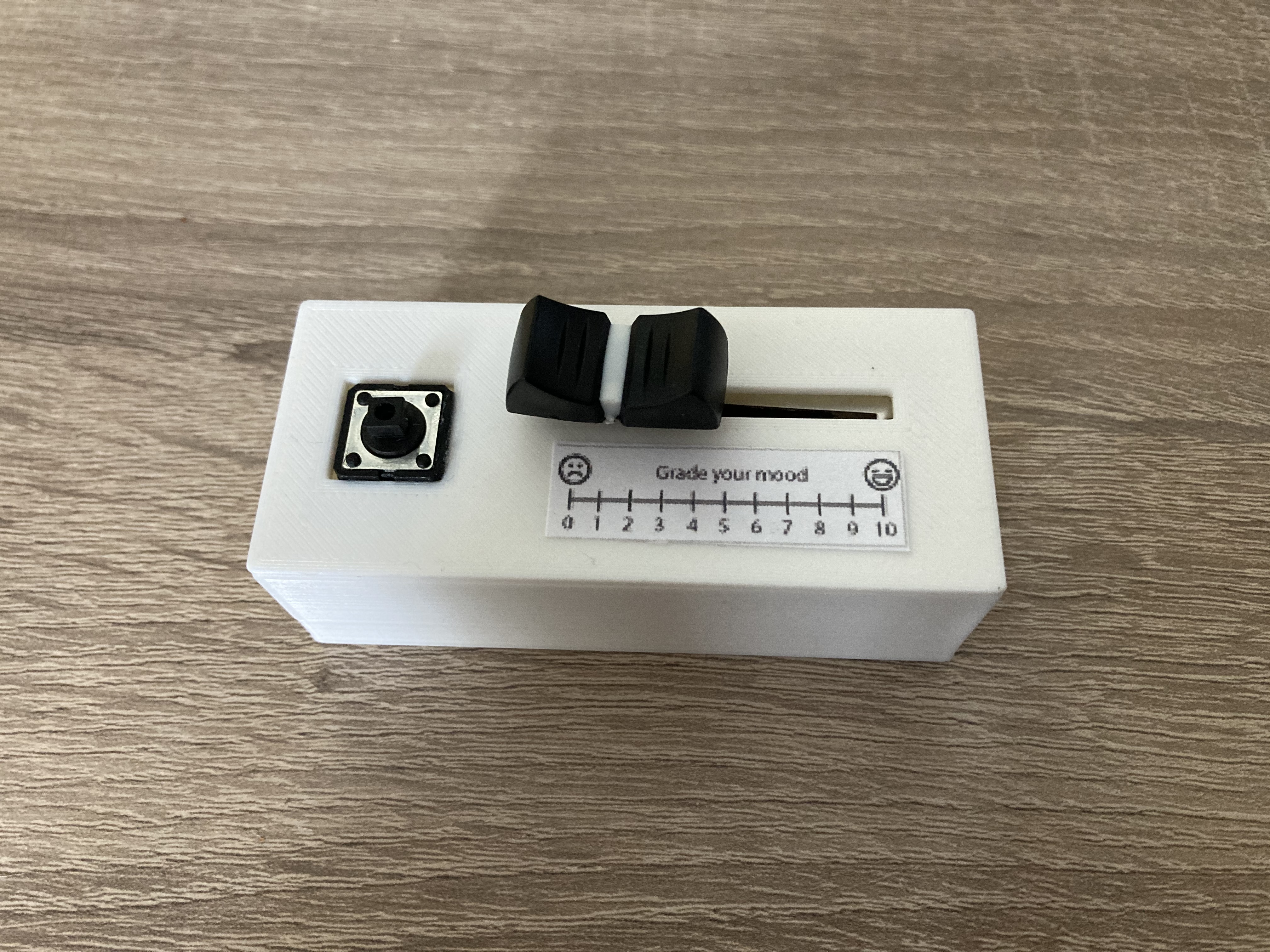
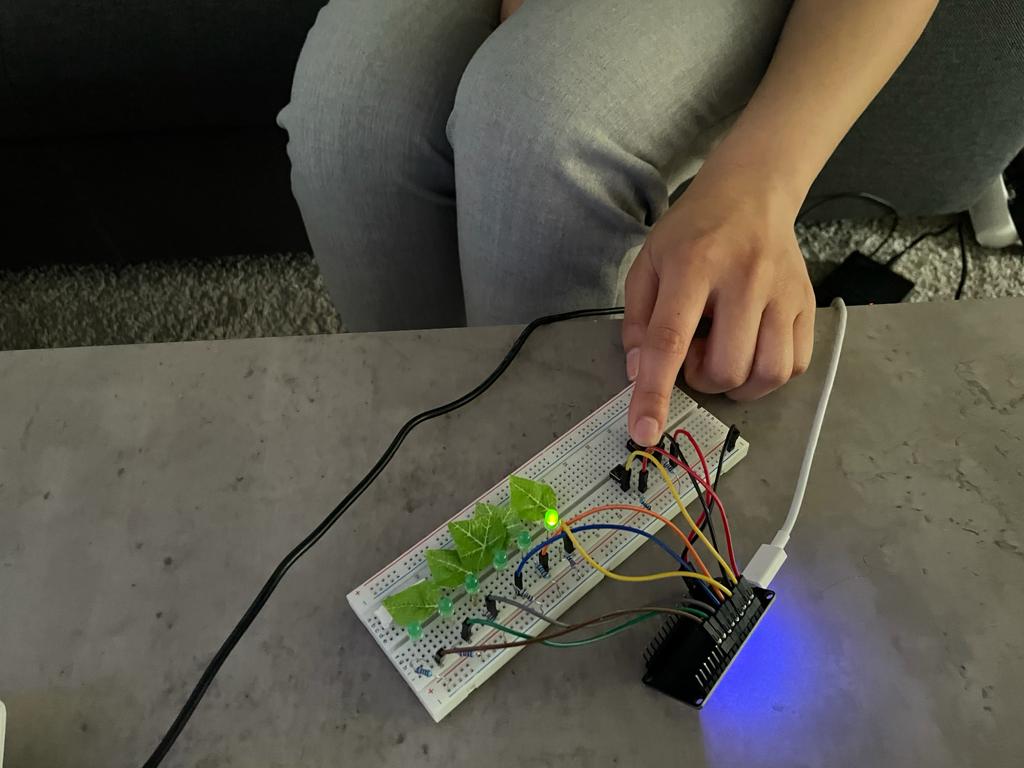
Throughout my master's I have developed in this area through multiple courses and activities. With the data-enabled design course, I focussed on electronics, 3D printing and the integration with OOCSI and Data Foundry, which is similar to what I did for the digital twin's course and overlaps with Math, Data & Computing. In other courses, I focussed more on the digital space like embodying intelligent behaviour, designing with advanced artificial intelligence, and my last three projects. Here I learned to work with Arduino and processing, but also more advanced languages like Python, JavaScript and HTML/CSS. The latter I have used to make this portfolio from scratch. I learned how to create conversational agents like voice agents and chatbots, but also interfaces.
For further development of this area during the master project my plan was initially to create a physical voice agent. I was planning on doing this by integrating the Boost.AI conversation from the previous semester on Alexa or Google Assistant. At the start of the project, I managed to do this and updated the conversation to be more suitable towards conversation by voice, by removing emoji adding more punctuality, and sometimes slightly changing words so they feel more spoken and as mentioned in the Math, Data, and Computing section I trained the conversation on more words.
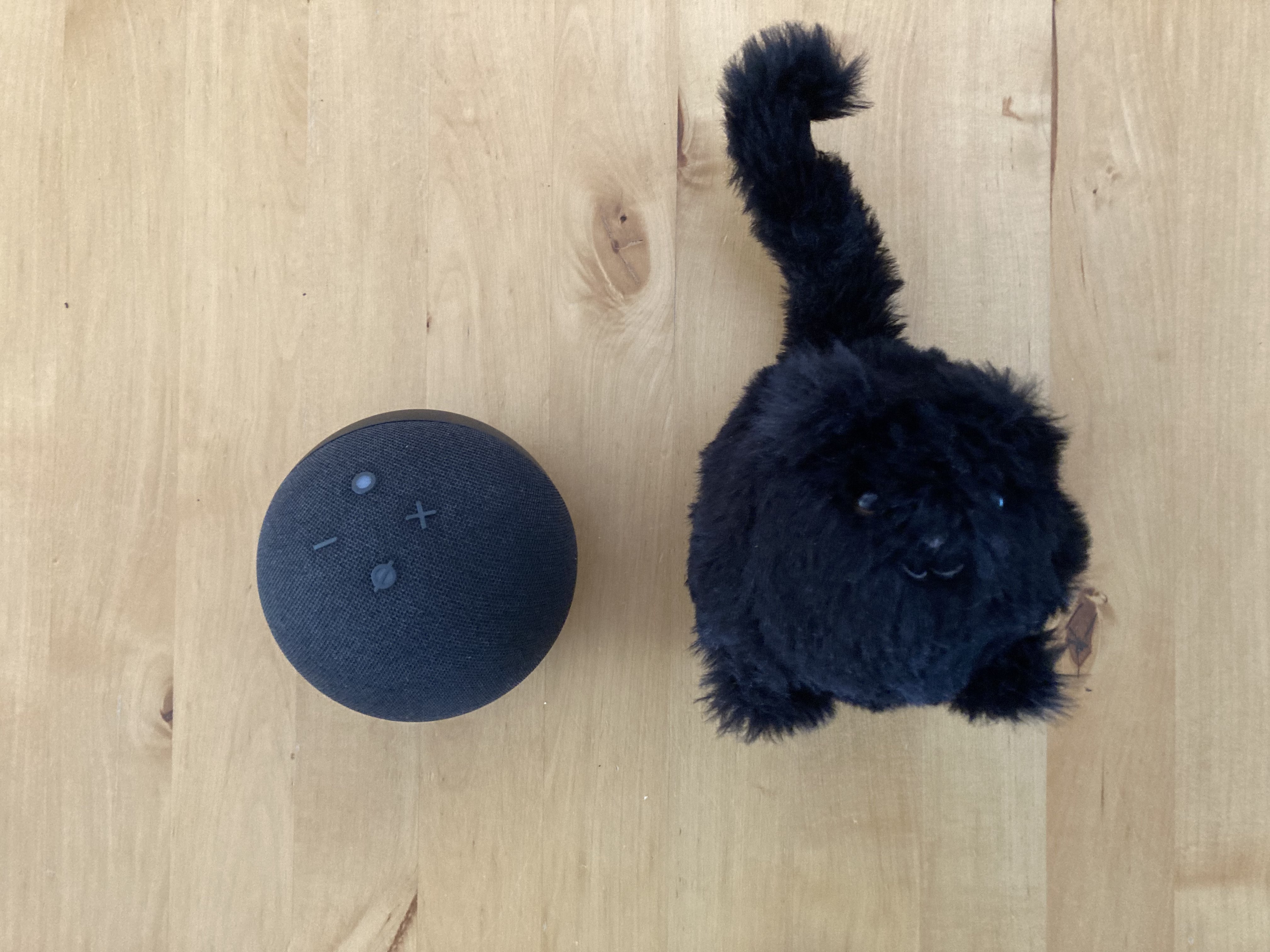
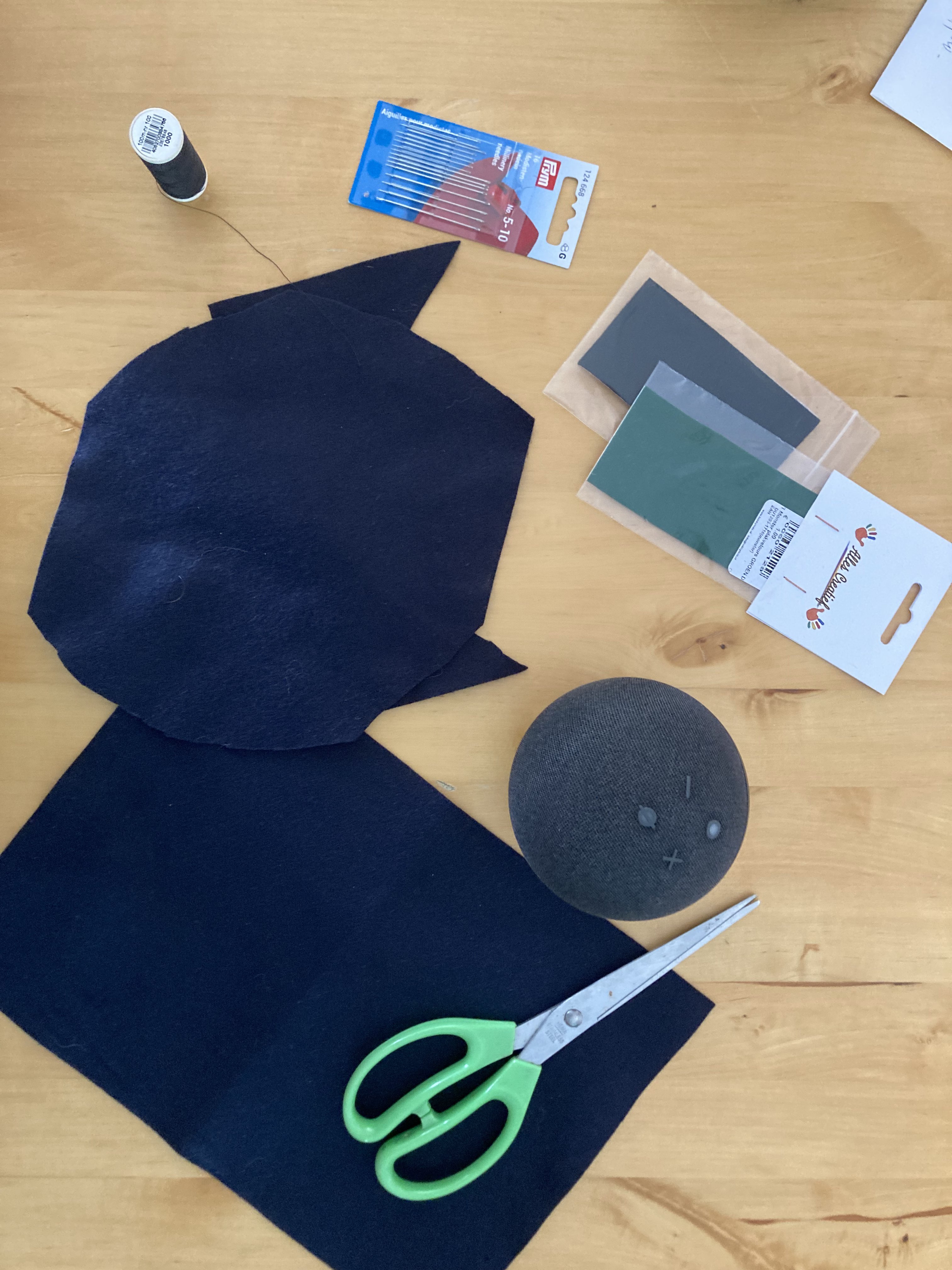
Later on, I moved away from Boost.AI and went with Amazon Developer mode, for which I needed to operate the platform and some basic JavaScript. The conversations work with Alexa as can be seen on this video. The code can be found on GitHub. Then the more physical aspect did not go as planned. I bought felt and needle but didn't manage to get a realistic or good-looking shape, which is important for people with dementia. For this reason, I decided to outsource the materials and bought a plush instead to put the Alexa inside.
When I design something I'd like to focus on the user. I think it is important to evolve the user already early on in the design process to get their input, to get a product that they would find useful. For my project, I like to focus on societal issues and people's well-being and how a product could help them on a regular if not daily basis.
Development
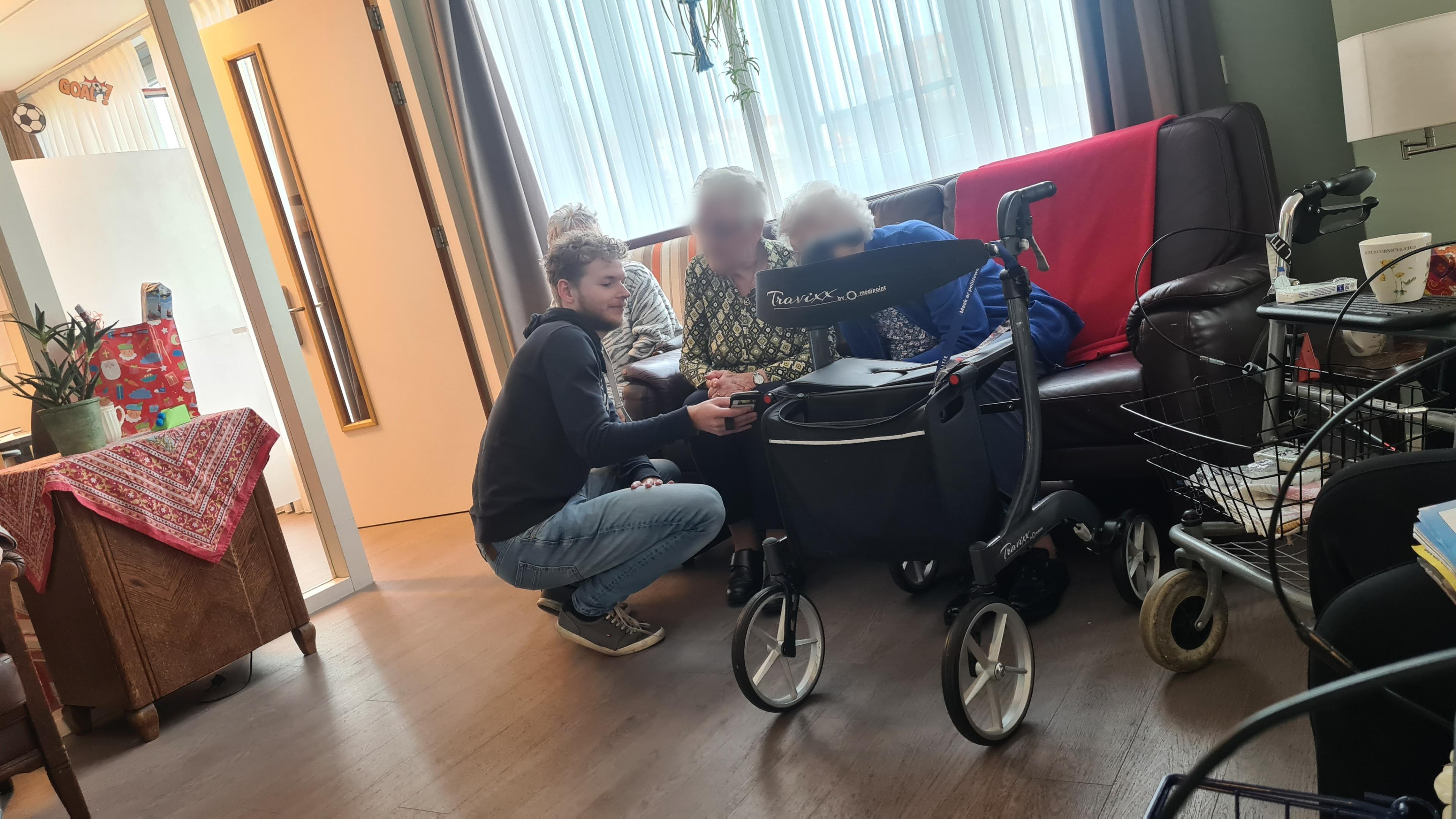
Before the master, I already valued user-centred design. However, during the course of my master's program, my interest grew. I have always found interest in societal issues and politics, and this is something I wanted to apply in my master's studies. In the first semester of the master, my peers and I developed a debating tool called "Debatably" aimed at facilitating conversations among individuals with different perspectives. Afterwards, I went to work on a motivation chatbot, doing research in the field of sociology to get a better understanding of human behaviour. Taking a step further, I challenged myself with a project focusing on people with dementia. Through a field study in elderly homes, I tested a chatbot designed specifically for engaging in conversations with individuals with dementia, so they could talk about their symptoms. This experience not only allowed me to work closely with this target group but also required me to cultivate patience and empathy to comprehend their perspectives and challenges.
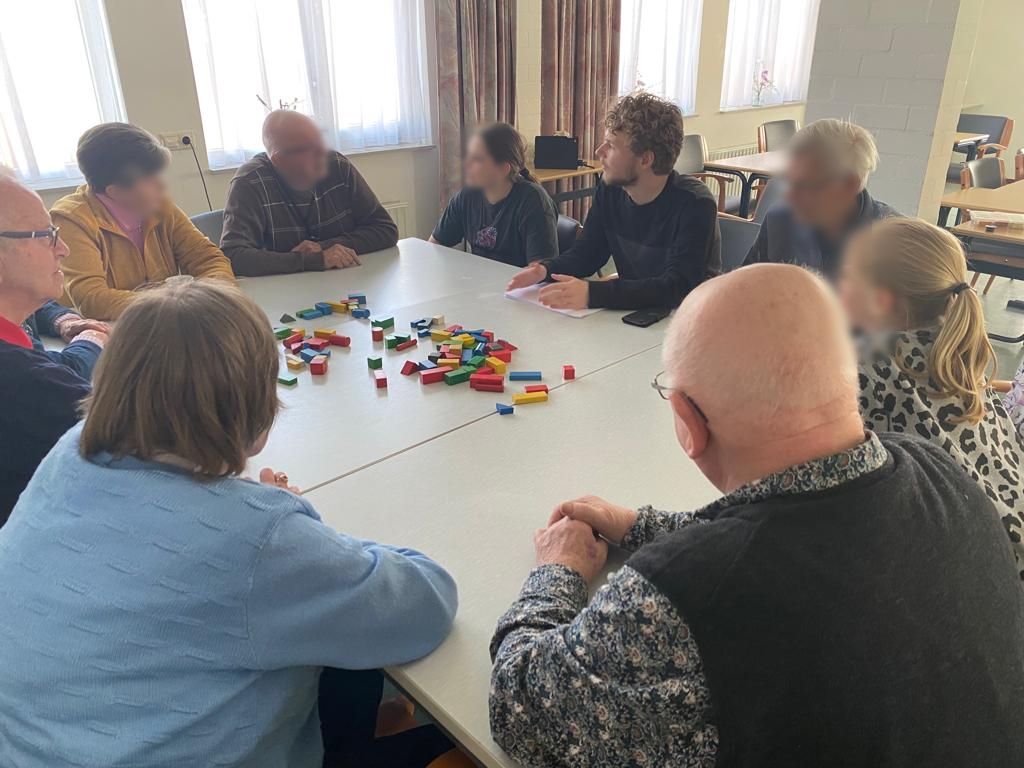
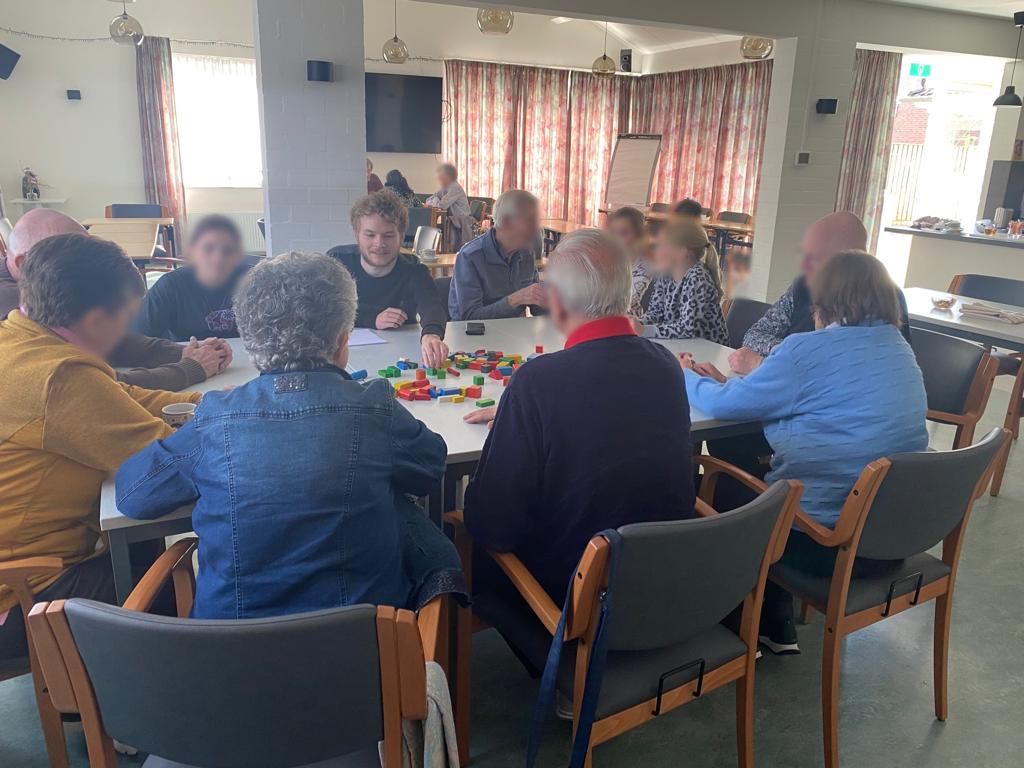
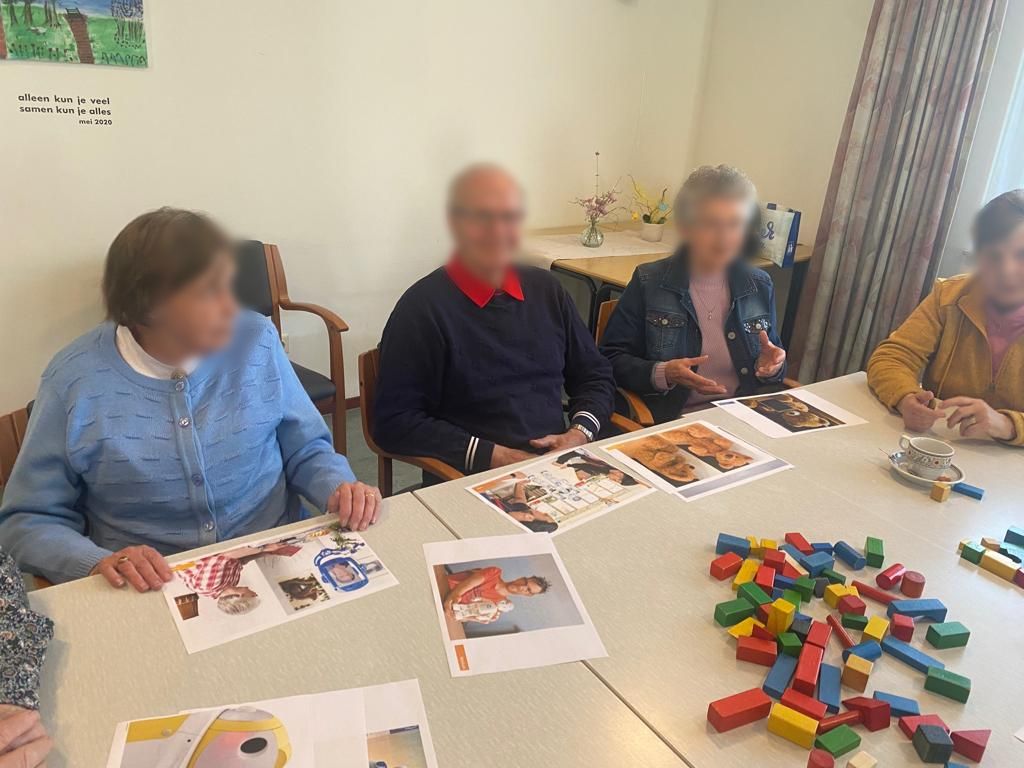
For my master's project, I again focussed on people with dementia as a continuation of my last project. This time I was more involved with them by doing co-design, as this is more user-centred. Therefore I organized generative co-design and evaluative co-design. The first is to get to know the people and see what their ideas are about the topic, the second is to evaluate the prototype. From this, I learned how to apply more user-centred methods and how to work with a more challenging target group.
I see aesthetics as something that can serve the functions of a design and enhance the user experience by doing so. Additionally, I view creativity as a tool that can be expressed in multiple ways, such as design and storytelling, and even conversation. This is further reinforced by methodologies used for the design process, this allows me, alone or together with others, to explore different directions of creativity and translate them to design.
Development
One course that impacted my development in this area was "Designer Perspective on IoT" from Joep Frens. It emphasized the importance of meaningful interaction and seamless design. I found this coming back in the design of chatbots, which I worked on during my master's projects, especially with people with dementia. Despite their limited understanding of technology, they have instincts towards touchscreens. Furthermore, small aesthetic elements like the use of colour, avatars, and conversation design played a significant role in creating an engaging experience. I also learned from "Designing with Advanced AI" that aesthetics can effectively convey messages and emotions from AI systems. As designers, it is our responsibility to use aesthetics to enhance our understanding of complex systems.
Where I mostly developed during the master project is the design of conversation. Throughout the FMP I learned how to use conversational structure and enhance this for a voice agent, but also how to use filler words, and creatively go around the limitations provided by technology to still have a comprehensive conversation. As for the aesthetics itself, for this project, I designed a co-design method using abstract blocks to get the user involved with the design process. Using their creative input I wanted to make a physical design. Unfortunately, the blocks were too abstract leading to creations that weren't very useful. However, the information that was vocally provided was still of use and lead to the design of the cat robot.
Identity & Vision
When it comes to business and entrepreneurship it is my least applied area of expertise as I found the least interest here. Still, stakeholders shouldn't be ignored and are important for the realization of the product.
Development
For most of the master, my focus has been on the end-user, while ignoring most other stakeholders, usually, because they aren't there. Although I think this changed during my M2.1 project where it became a necessity to evolve for the following two reasons, caregivers as a stakeholder have a fast amount of knowledge and experience with people with dementia that I want access to both the design of a product as the evaluation of the product and to get in contact with people with dementia this will have to go through a larger organization and eventually caregivers. As someone introverted, it can be challenging to establish this contact, which is something that I needed to overcome.
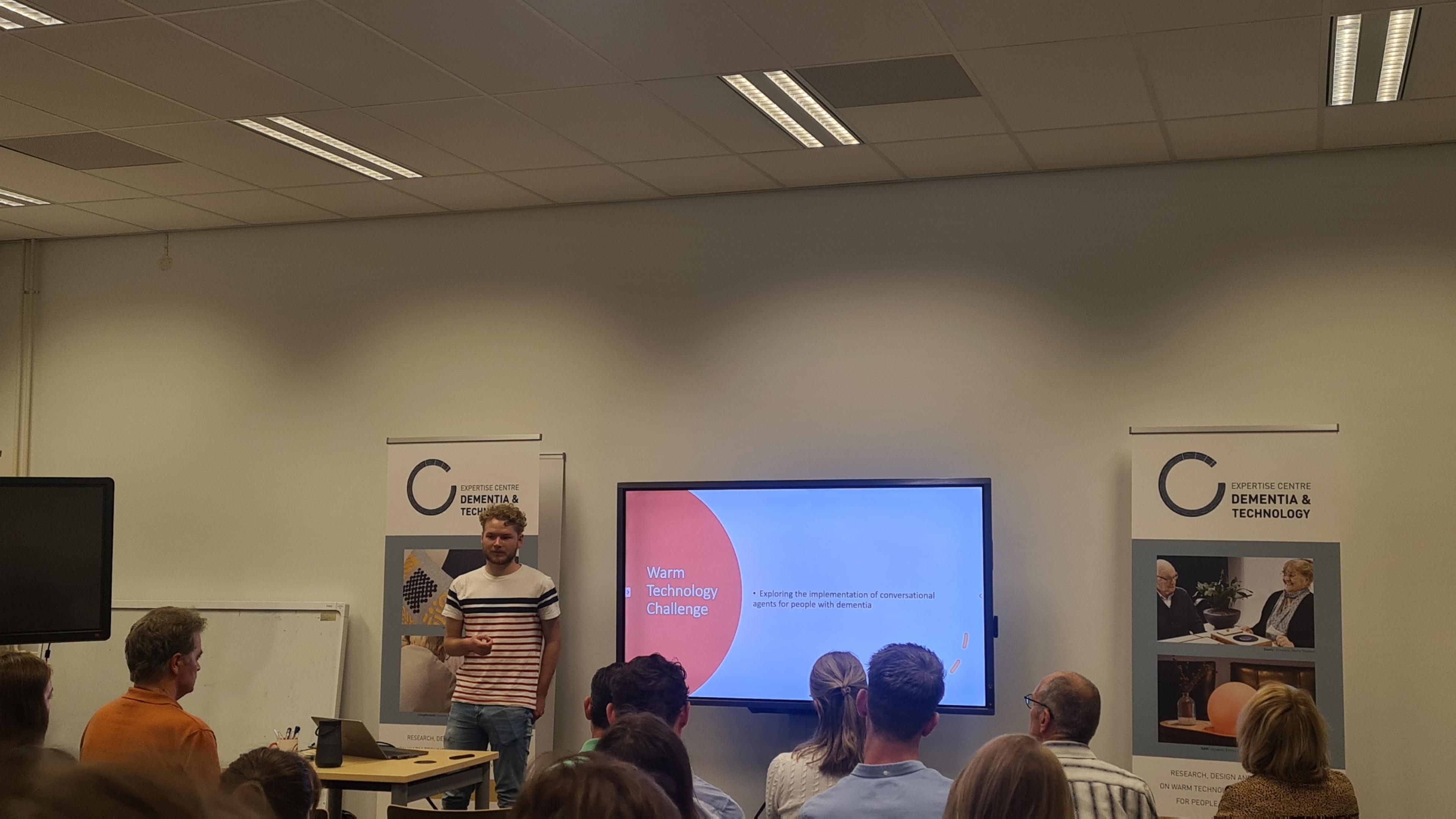
For my FMP I went a step beyond the last semester. Like the last semester I needed to get in contact with care facilities and now was more actively trying to get input from caregivers and other experts like doctors in the field of dementia. The Warm Technology Challenge, which I signed up for, also provided me with the opportunity to get in touch with companies and experts in the field for whom I needed to present my findings.
Future
When I complete my master's degree, my goal is to join a company or research agency to continue my professional growth. I would like to work in a medium-sized to a large company that has a diverse range of people with different expertise, including other designers. This environment would provide valuable opportunities for learning from others, having my ideas challenged, and engaging in meaningful conversations and debates. I prefer to work on user-centred projects, but I am open to roles that emphasize technology, as long as they offer learning experiences that can contribute to my future interests. While I am still reflecting on the specifics of my future job, I can imagine that it aligns with my vision of benefiting others and promoting happiness for both myself and those around me.